
Share
AI-powered spec review isn't a future concept. It's a tool that estimators and preconstruction teams are using right now to reduce bid prep time, catch missed requirements, and process more bids with the same team. But for contractors who haven't used AI on spec documents before, the process isn't always obvious. This post walks through how AI spec extraction actually works, what it can and can't do, and how to integrate it into your existing bid prep workflow.
What AI Spec Extraction Actually Does
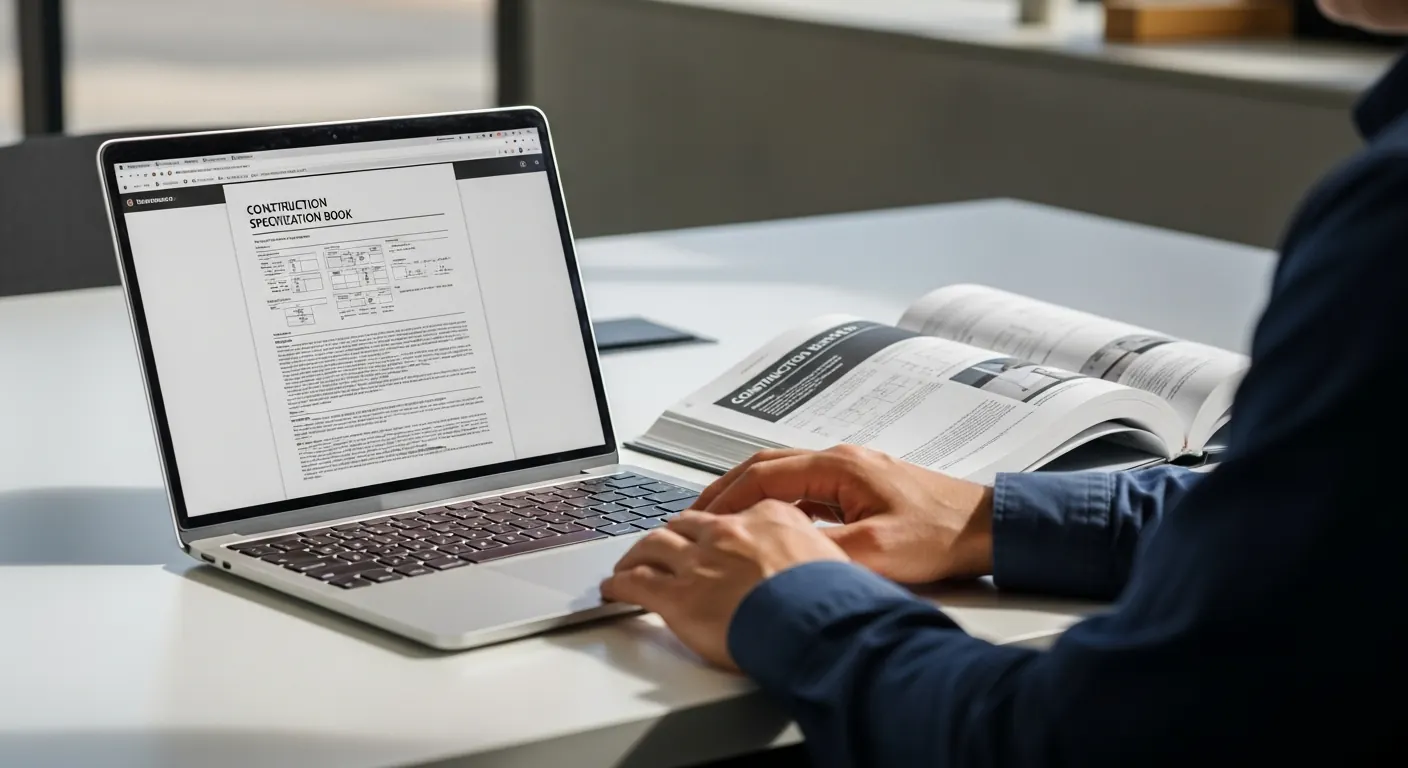
When you upload a construction spec book PDF to an AI-powered tool like SpecSwift, the AI reads the document the way an experienced estimator would, but faster and without fatigue. It processes the text of every spec section, identifies the structure (Part 1, Part 2, Part 3), and extracts specific categories of information based on what estimators and project managers need.
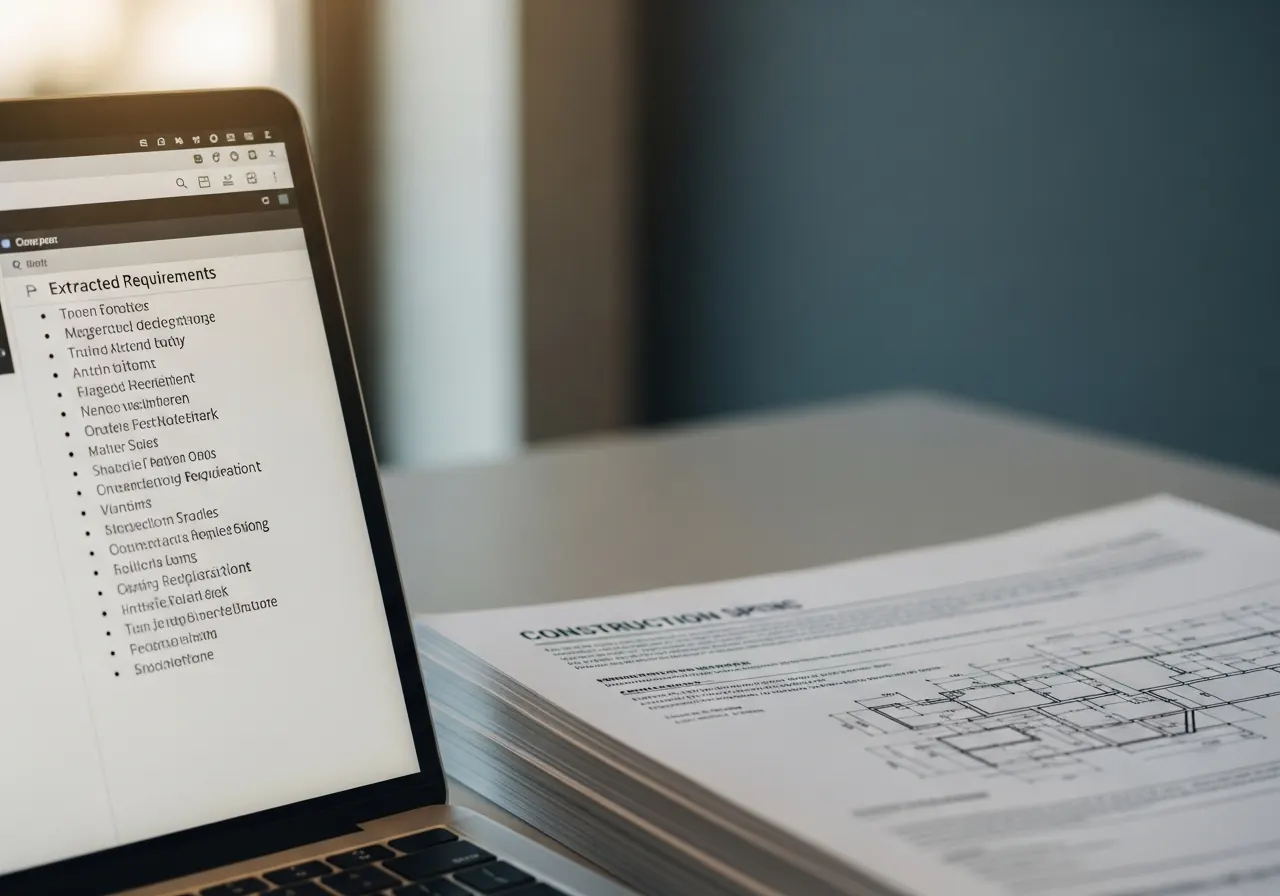
The key categories that AI spec extraction targets:
Material standards: ASTM, UL, FM, ANSI, and other standard references that define product requirements by section
Submittal requirements: shop drawings, product data, samples, certificates, and O&M documentation required in Part 1 of each spec section
Approved manufacturer lists: specified manufacturers and any substitution restrictions
Trade responsibilities: scope assignments, furnished-by/installed-by distinctions, and coordination requirements between trades
Testing and inspection requirements: special inspection, field testing, mockup requirements, and performance verification obligations
Compliance and warranty language: warranty durations, extended warranty requirements, conditions that affect coverage
The output is organized by CSI division and spec section, giving estimators a structured summary of requirements rather than a raw document to read through.
How to Prepare Your Spec Book for AI Extraction
Getting good results from AI spec extraction starts with the quality of the document you upload. A few preparation steps make a meaningful difference:
Use the most current version of the spec. If addenda have been issued during the bid period, make sure your spec book PDF incorporates those changes or that you upload addenda separately and review them alongside the extracted output. Addenda frequently modify spec sections in ways that affect material requirements or submittal obligations.
Use a text-based PDF, not a scanned image. AI extraction works by reading text. A spec book that's been scanned as an image, common with older documents or when specs are printed and re-scanned, requires OCR processing before text extraction can happen. Most modern AI spec tools handle this automatically, but text-based PDFs produce faster, more accurate results.
Know which divisions are relevant to your scope. While AI extraction can process the full spec book, you'll get more value from the output if you're focused on the CSI divisions that matter for your bid. A plumbing sub focused on Division 22 should still review Division 01 output, but they don't need to spend time on Division 09 finishes requirements.
How to Use AI Extracted Output in Your Bid Prep Workflow
AI spec extraction produces a starting point, not a finished product. The output tells you what the spec requires. Your estimating judgment tells you what that means for your bid. Here's how to integrate the two:
Step 1, Review extracted material standards. Go through the AI-extracted material standards for your relevant divisions. For each standard, verify that your proposed products meet the referenced ASTM, UL, or FM designation. Flag any products where compliance is uncertain and follow up with the manufacturer or supplier before bid submission.
Step 2, Build your submittal list. Use the extracted submittal requirements to build your submittal log for the project. Assign each submittal to the responsible party, estimate the preparation time, and flag any submittals with long review cycles or material lead time implications.
Step 3, Check trade responsibility language. Review the extracted trade responsibility items and compare them against your scope assumptions. Identify any scope items that the spec assigns to your trade that weren't in your original scope plan, and any items you assumed were yours that the spec assigns elsewhere.
Step 4, Flag testing and inspection requirements. Add testing and special inspection costs to your bid based on the extracted requirements. Get quotes from testing laboratories if needed, and make sure inspection scheduling is reflected in your project schedule assumptions.
Step 5, Review approved manufacturer lists and substitution restrictions. Verify that every product you're pricing is on the approved list or is eligible for substitution. If substitutions are required, factor in the time and cost of the substitution approval process.
What AI Spec Extraction Can't Do
AI extraction is a powerful tool for accelerating spec review, but it has real limitations that estimators need to understand:
It doesn't replace estimating judgment. AI extracts requirements. It doesn't evaluate them. Whether a testing requirement is standard for a project type, whether a substitution is likely to be approved, or whether a trade responsibility assignment creates a scope risk requires experienced judgment that AI doesn't provide.
It works best on well-structured documents. Spec books that follow standard CSI MasterFormat formatting produce better extraction results than non-standard documents, handwritten notes, or heavily modified legacy specs.
It requires review, not blind trust. AI extraction should be treated as a first pass, not a final answer. Review the output against the spec for any sections where the requirements are complex or where the AI output seems incomplete.
Used correctly, AI spec extraction doesn't replace the estimator's role. It protects their time so that role can be applied where it matters most.
Further reading: From Upload to Output: How SpecSwift Scans Your Spec Documents and Manual Spec Review vs. AI Spec Scanning: A Side-by-Side Time Comparison and How to Pull Submittal Requirements from a Spec Book Using AI.